


 USD
($)
USD
($) AUD
($)
AUD
($) CAD
($)
CAD
($) EUR
(€)
EUR
(€) HKD
($)
HKD
($) MYR
(RM)
MYR
(RM) GBP
(£)
GBP
(£) SGD
($)
SGD
($)




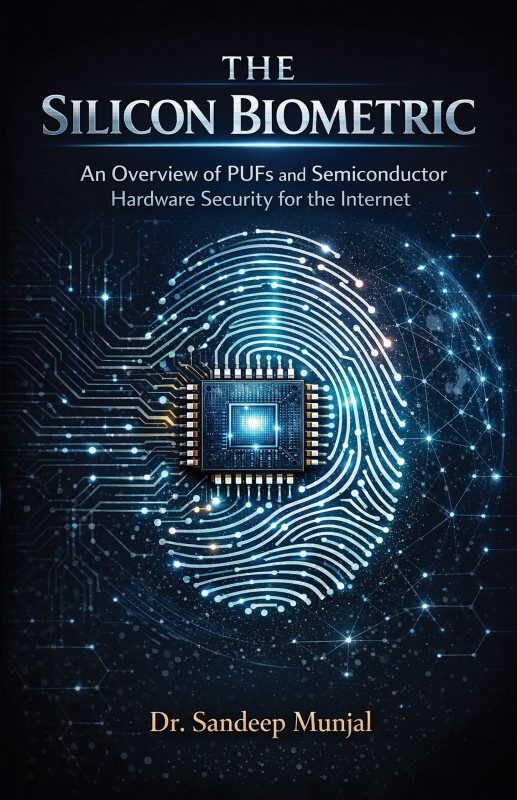

The Silicon Biometric: An Overview of PUFs and Semiconductor Hardware Security for the Internet
by drsandeepmunjal | 01-Apr-2026
(0)
The Silicon Biometric explores the critical shift from traditional, memory-based encryption to hardware-intrinsic security within the global semiconductor supply chain. As the Internet of Things (IoT) expands, static cryptographic keys stored in n...

Original
Books
Fastest
Delivery
7-day
Replacement
Book Details
- Language : English
- Pages : 144
- ISBN : 9789378252747
- Genre: ACADEMIC
- Size : 5.5" x 8.5"
- Binding Type : PAPERBACK
- Age Group: + Years
- Paper Type : WHITE PAPER
- Interior : BLACK & WHITE
- Cover : GLOSS FINISH
- Book Type : PAPERBACK
- Tags : Dr. Sandeep Munjal,The Silicon Biometric: An Overview of PUFs and,Semiconductor Hardware Security for the Internet,Physically Unclonable Functions (PUFs),Semiconductor Hardware Security,IoT Device Authentication,Hardware Root of Trust,Side-Channel Attack Resistance,Resistive RAM (RRAM) Security,Cryptographic Key Generation,Embedded Systems Security
-
Best Sellers Rank :
#2019 in Academics
#12643 in Global
Reviews
There are no reviews for this product yet.

Rs.321

Rs.195



Rs.137

Rs.399
