


 USD
($)
USD
($) AUD
($)
AUD
($) CAD
($)
CAD
($) EUR
(€)
EUR
(€) HKD
($)
HKD
($) MYR
(RM)
MYR
(RM) GBP
(£)
GBP
(£) SGD
($)
SGD
($)




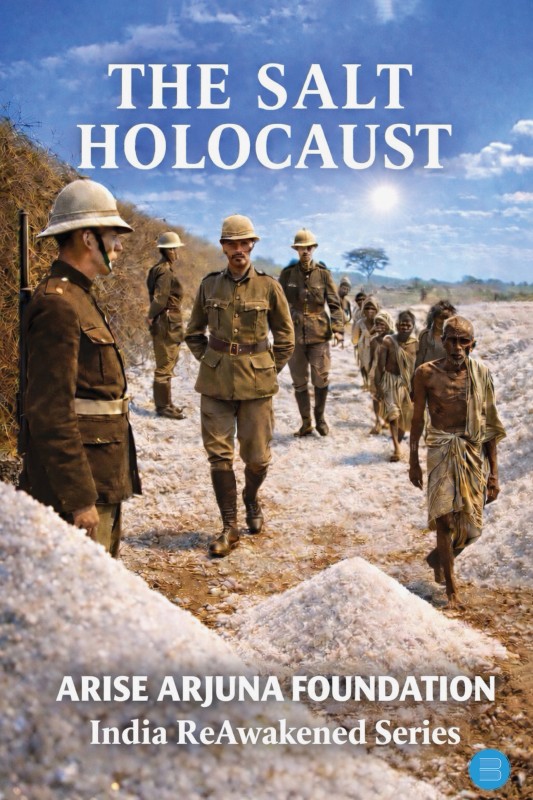
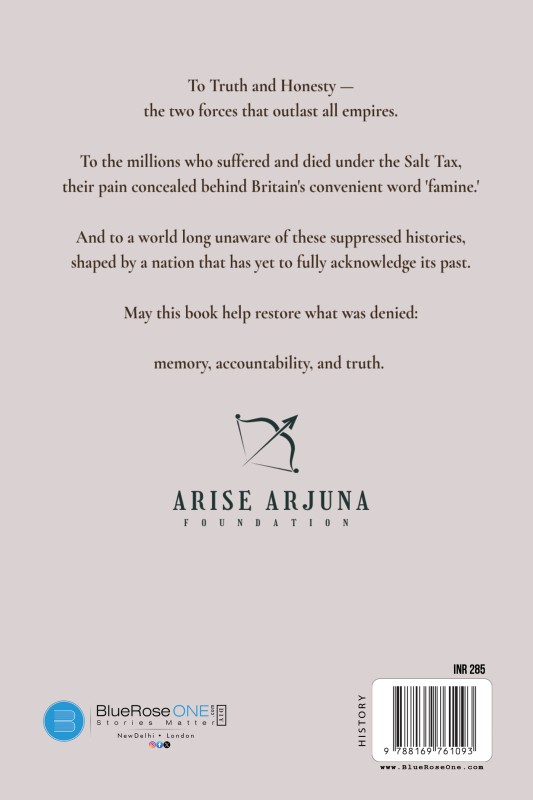
The Salt Holocaust
by Arise Arjuna Foundation | 03-Jul-2026
(0)
The Salt Holocaust: Britain’s Forgotten Genocide in India (1757–1947) makes the case that British colonial rule was not merely exploitative but genocidal. Drawing on economic history, colonial records, and famine data, it traces how a land that pr...

Original
Books
Fastest
Delivery
7-day
Replacement
Book Details
- Language : English
- Pages : 181
- ISBN : 9788169761093
- Genre: OTHERS
- Size : 6" x 9"
- Binding Type : PAPERBACK
- Age Group: + Years
- Paper Type : WHITE PAPER
- Interior : BLACK & WHITE
- Cover : MATTE FINISH
- Book Type : PAPERBACK
- Tags : Arise Arjuna Foundation,Title of the Book: The Salt Holocaust,1. British colonialism India,2. Bengal famine,3. East India Company,4. salt tax India,5. colonial genocide,6. famine deaths India,7. Indian economic history,8. British Raj atrocities
-
Best Sellers Rank :
#49 in Historical Fiction
#13537 in Global
Reviews
There are no reviews for this product yet.

Rs.321

Rs.195



Rs.137

Rs.399
