


 USD
($)
USD
($) AUD
($)
AUD
($) CAD
($)
CAD
($) EUR
(€)
EUR
(€) HKD
($)
HKD
($) MYR
(RM)
MYR
(RM) GBP
(£)
GBP
(£) SGD
($)
SGD
($)




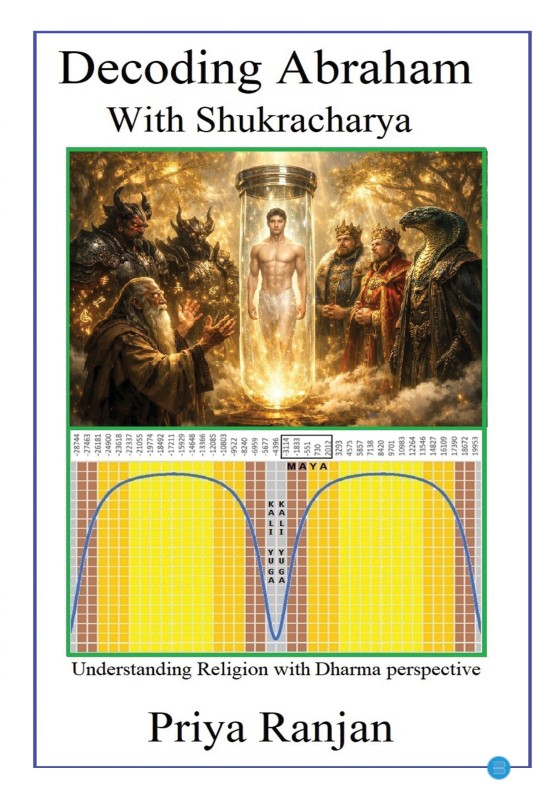
Decoding Abraham with Shukracharya, SUBTITLE: Understanding Religion with Dharma perspective
by Priya Ranjan Srivastav | 26-Feb-2026
(0)
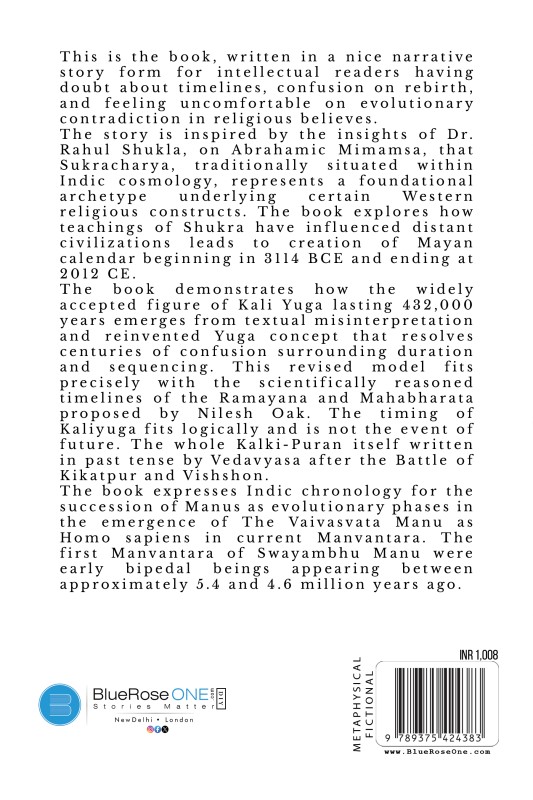
This is the book, written in a nice narrative story form for intellectual readers having doubt about timelines, confusion on rebirth, and feeling uncomfortable on evolutionary contradiction in religious believes.The story is inspired by the insigh...

Original
Books
Fastest
Delivery
7-day
Replacement
Book Details
- Language : English
- Pages : 108
- ISBN : 9789375424383
- Genre: FICTION
- Size : 6" x 9"
- Binding Type : PAPERBACK
- Age Group: + Years
- Paper Type : NATURAL SHADE
- Interior : BLACK & WHITE
- Cover : MATTE FINISH
- Book Type : PAPERBACK
- Tags : Abraham,Shukracharya,Mayan calender,2012,432000,Kalki Avtar,Yuga,Dharma
-
Best Sellers Rank :
#3346 in Fiction
#12418 in Global
Reviews
There are no reviews for this product yet.

Rs.321

Rs.195



Rs.137
Rs.399
