
Every scientist, regardless of their field, sooner or later reaches a point where knowledge alone fails to answer the deeper question: What am I really building with what I know? Bio-Margtara is written for that moment. This book is not bound to a...

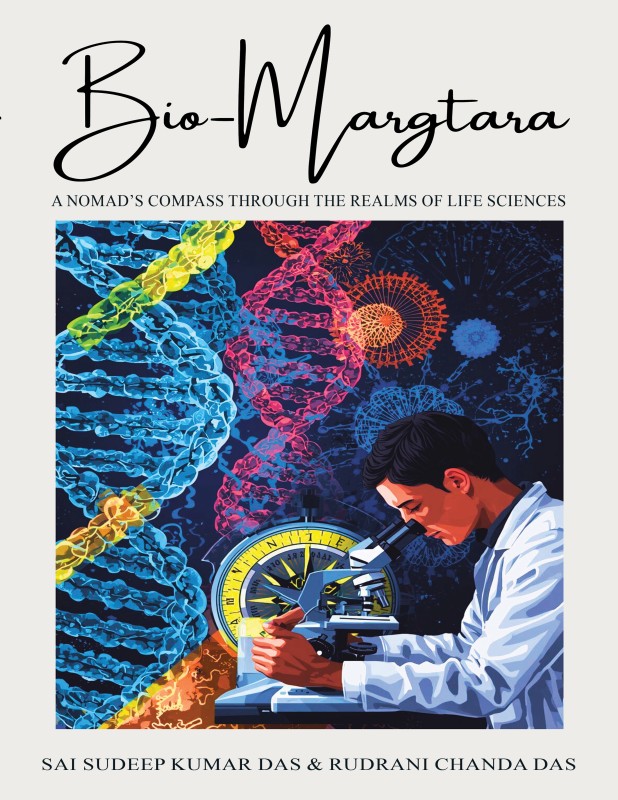
Every scientist, regardless of their field, sooner or later reaches a point where knowledge alone fails to answer the deeper question: What am I really building with what I know? Bio-Margtara is written for that moment. This book is not bound to any one subject, degree level, or level of education. It appeals to students, researchers, teachers, innovators, and practitioners in all branches of the scientific disciplines: the life sciences, the physical sciences, the computational sciences, the health sciences, the environmental sciences, and the interdisciplinary frontiers where they blend and new questions are being asked. It is, at heart, a map of the scientific ecosystem itself, showing the connections that join disciplines, the compound power of skills, the influence of institutions on the mind, and the creation of the path to a career that is the intersection of curiosity, competency, and consequence. It sees degrees not as a terminus, but as a launchpad, research not as routine, but as a responsibility, science not as a career, but as a way of seeing the world and choosing to serve it. What makes this book different, however, is its commitment to unvarnished credibility—an authenticity born of lived academic and research life, analysis of existing systems, and a keen grasp of how science truly works, in labs, classrooms, industries, and society as a whole. There is no inspirational haze, only clarity, structure, and truth. The book talks candidly about the realities that scientists confront: uncertainty, competition, funding pressures, ethical dilemmas, communication gaps, and the unspoken fear of stagnation. It doesn't reassure; instead, it resents frameworks for how to think systemically, how to build transferable skills, how to communicate ideas with authority, how to move between disciplines without losing rigour, and how to stay alive intellectually over long careers. Bio-Margtara also carries a deep respect for tradition. It honours the classical scientific values—discipline, patience, scepticism, mentorship, and service—while preparing readers for a future shaped by data, automation, globalisation, and interdisciplinary convergence. The old wisdom is not discarded; it is sharpened. This is a book you return to at multiple stages: ● when choosing direction ● when facing doubt, ● when stepping into leadership, ● when redefining purpose. If you are engaged in science—any science—and you refuse to let your work become mechanical, fragmented, or hollow, this book is written for you. Bio-Margtara does not promise certainty. It builds scientific courage. It does not narrow your path. It teaches you how to navigate complexity without losing integrity. Not a manual. Not a memoir. A compass for those who choose the long, demanding, meaningful life of science.